
Published October 25, 2026
Measure D: What Coronado Voters Are Being Asked to Decide

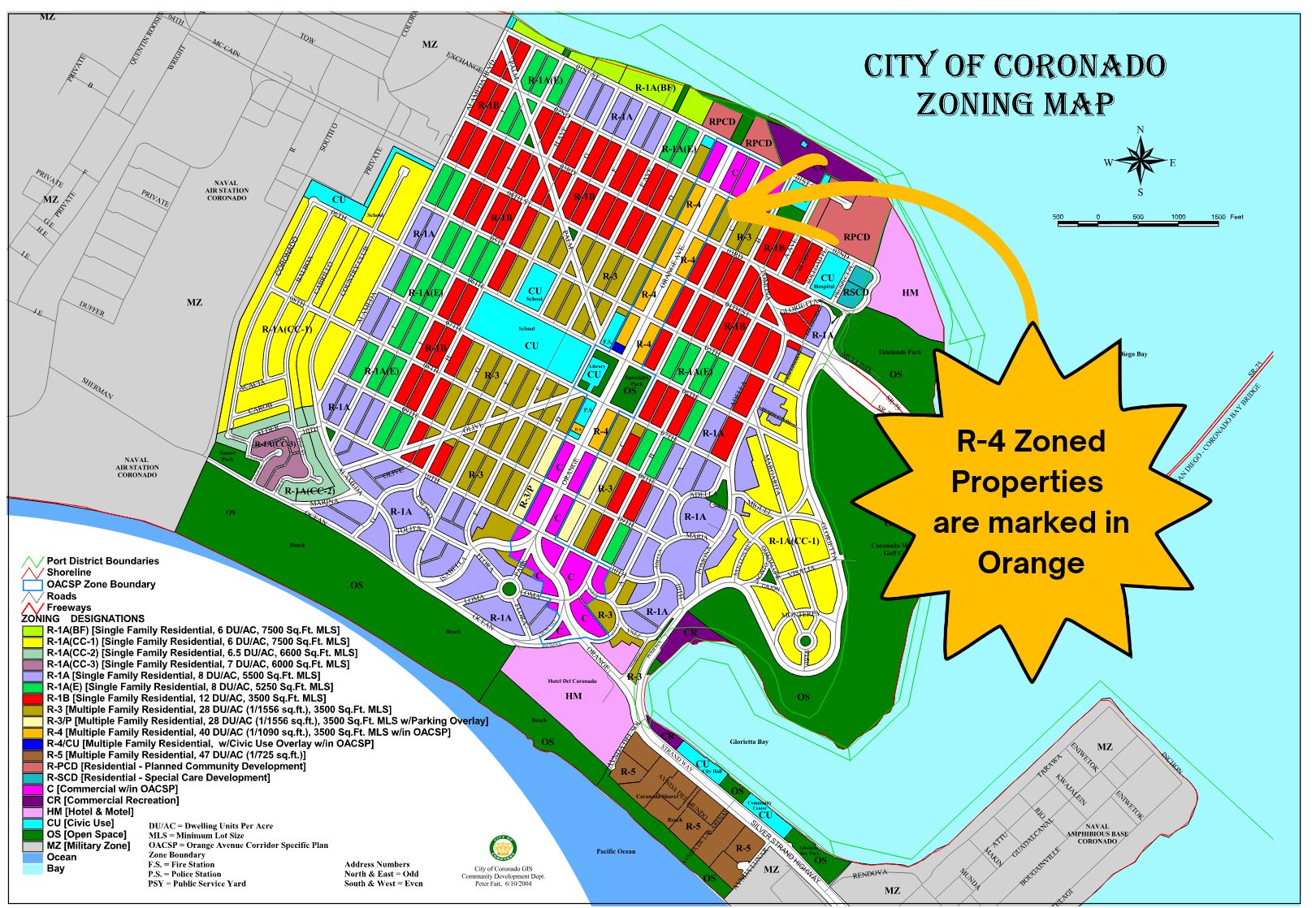
On November 3, Coronado voters will decide on Measure D, a proposal to raise the height limit for apartment and condo buildings in the R-4 zone, an area along Orange Avenue between Second and Eighth Streets. Currently, these buildings are limited to three stories and 35 feet. Measure D would increase those limits to four stories and 42 feet. According to a San Diego Union-Tribune article, an estimated four parcels would be affected by the proposed change.
Why is this coming up now? California requires cities to plan for additional housing, and state housing officials have determined that Coronado’s existing height limit is too restrictive to accommodate the number of homes already allowed in this zone. The proposed increase is part of the city’s effort to meet the State’s requirements.
An additional story may sound like a modest change, but in a community where village charm is deeply valued, it raises understandable questions about how Coronado should grow. It also brings a larger debate close to home: how does our small town respond to state housing requirements while preserving the character of our neighborhoods and maintaining local control over future development.
Here’s what Measure D would change, why it’s on the ballot, and the arguments on both sides.
Where would the change apply?
Measure D applies to properties designated R-4, the city’s zoning category for certain apartment and condo properties along Orange Avenue between Second and Eighth Streets (See map below).

It would not change building heights throughout Coronado, or even for every property along that stretch of Orange. The change only applies to properties within the R-4 zone.
For those properties, the current local height limit is three stories and 35 feet. Measure D would increase it to four stories and 42 feet.
How did we get here?
California requires cities to plan for additional housing at a range of income levels. The state determines each region’s housing need (Regional Housing Needs Assessment), and SANDAG, the San Diego Association of Governments, divides our region’s share among its cities and the unincorporated county.
SANDAG’s formula considers where jobs and public transportation are located. It also includes an adjustment intended to spread housing opportunities more fairly among communities and income levels.
Coronado’s assessment for the 2021–2029 planning period is 912 additional homes. That means individual homes, condos or apartments, not 912 separate properties. In other words, an apartment building with 20 units would account for 20 homes.
The city must show how available sites and building rules can accommodate that number through its housing plan, formally called the Housing Element.
Coronado pushed back on the SANDAG assessment, particularly focusing on how military jobs were counted. The city argued that Navy employment increased its housing responsibility even though it has little control over Navy land. In a 2023 agreement with the state, 374 planned Navy housing units were allowed to count toward Coronado’s total, based on the Navy’s plans at that time. This agreement reduced Coronado’s assessment from 1,286 to 912.
What does that have to do with an extra story?
The R-4 zone already allows 40 homes per acre. The state’s Department of Housing and Community Development, known as HCD, says the current height limit prevents property owners in R-4 from building the number of units the city’s rules already allow on their parcels.
According to the City Attorney’s analysis, HCD called for at least four stories and 40 feet, with 42 feet preferred. Coronado’s housing plan consequently includes a commitment to put the proposed height increase before voters, because the City Council cannot make that change on its own. Coronado voters established a height restriction through Proposition R in 1972, in response to the Coronado Shores development, so changing that voter-approved restriction requires another public vote unless state law overrides it.
Why does staying in compliance matter?
Part of the city’s goal is to meet its Regional Housing Needs Assessment while keeping as much local control over development as state law allows.
There are two different agencies involved: SANDAG assigns the housing number. HCD reviews whether the city’s housing plan follows state law.
Failing to comply with state housing law could lead to court orders, fines, and restrictions on Coronado’s authority over certain development decisions.
Losing local control over certain development decisions could mean Coronado has fewer grounds to reject or require changes to certain housing projects, even when they conflict with local building rules.
What would a yes vote mean?
A yes vote would raise the local height limit for apartment and condo buildings in the R-4 zone (along Orange Ave) to four stories and 42 feet. The City Attorney’s analysis says this would satisfy the HCD height requirements described above.
What would a no vote mean?
A no vote would reject the increase and retain the current three-story, 35-foot local limit. It would also leave HCD’s concern about that limit unresolved.
It would not cancel Coronado’s housing requirement or guarantee that every future building would stay within the existing limit because state housing laws can override local restrictions.
Supporters have warned that rejecting the measure could put the city’s housing plan at risk and open the door to projects with fewer local restrictions, even though a rejection would not automatically result in fines or the loss of state approval.
Would this actually lead to more construction?
Increasing the building height limit and making it worthwhile to build are two different things.
In an October 8 article, the San Diego Union-Tribune explored how much construction the measure might produce. Housing analyst Nathan Moeder told the newspaper that replacing an existing three-story apartment building with a four-story building would generally add too few homes to justify the cost. One estimate suggested that only 4 lots on Orange Avenue could be impacted.
His assessment suggests that the measure could have a limited effect on construction under current market conditions. But opponents fear that the change could open the door to changes in other zones as well.
Who supports Measure D?
Public supporters include the San Diego County Democratic Party and SEIU Local 221.
Coronado homeowner Glenn Hopson also made the case for passage in an October 15 letter to The Coronado News. He argues that allowing more housing could give renters and people who work in Coronado more opportunities to live here.
Who opposes Measure D?
The Coronado Republican Club opposes the measure. Co-chair Kevin Shaeffer signed the official ballot argument against it, calling for the preservation of Coronado’s village character and the height protections voters established in 1972.
City Council candidates Rebecca King and Ricky Hoyt have also publicly stated their opposition.
Reform California recommends voting no, citing the weakening of existing height protections.
Before you vote
The immediate question is whether to allow an additional story on designated properties along Orange Avenue. The larger question is how Coronado meets its housing obligations while preserving the character residents value and retaining a say in future development.
For a closer look, the city has published the City Attorney’s impartial analysis, the full measure, and the official argument against it.
Election Day is Tuesday, November 3, 2026.

Kate Milke
Broker Associate | Coronado Island Realty
or another way